Flett Creek
History in the Flett Creek Watershed
Indigenous Peoples
The Flett Creek watershed is part of the traditional land of the Puget Sound Salish peoples belonging to the Steilacoom, Puyallup, Nisqually, and Squaxin Island tribes and bands. Although we do not know how indigenous peoples lived within this watershed explicitly, it is well documented that the Salish peoples interacted extensively with the types of ecosystems present including harvest of Garry oak acorns and camas bulbs, along with using fire to manage Garry oak and prairie ecosystems in this region. The ancestral lands of the Salish peoples were ceded to the U.S. government with the signing of the Medicine Creek Treaty with 662 representatives of the 9 tribes in the area on Christmas day in 1854, which was broken shortly thereafter. Indigenous people are a vital part of our community. We honor the traditional caretakers of this land and welcome their input and involvement in restoring the watershed to a more natural state.
Flett Dairy
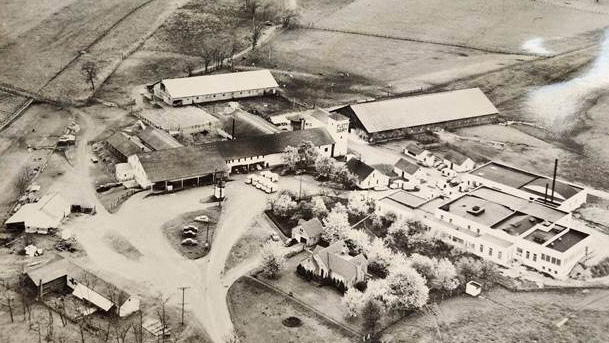
Clover Park Technical College
Flett Creek – Watershed Characteristics
The Flett Creek watershed covers 7,153 acres and is the second largest subwatershed drainage in Tacoma. It is a salmon bearing stream with presumed presence of chinook, documented coho spawning, and documented presence of chum and winter steelhead. The current headwaters are on CPTC’s outdoor lab at Flett Wetland. A historic map (circa 1830s) indicates the wetlands continued upstream with braided channels along the same valley in which the current Flett stormwater detention ponds reside.
Currently, water is pumped (at a rate up to 40,000 gallons per minute) into Flett Wetland from Flett Stormwater Detention Pond #4, which is managed by City of Tacoma. There are also several springs feeding the wetland from the southern hillside, along with any natural rainfall and runoff. Stormwater runoff from mostly residential areas, along with light commercial and industrial areas, in City of Tacoma first enters Wapato Lake which then flows to Wards Lake, then the City gravel pit, then through four detention ponds, and finally pumped into Flett Wetland. The detention ponds also receive water from Snake Lake. A stream channel winds its way through Flett Wetland passing under Lakewood Drive and Bridgeport Way, after which a stream canyon forms with Flett Creek channel at the bottom. Flett Creek flows into Chambers Creek and then into Puget Sound at Chambers Bay.
Flett Creek – Current Watershed Challenges
Considering much of the Flett Creek watershed has seen substantial urban development, Flett Wetland and Creek are within fairly natural landscapes. One big challenge in the watershed arises from its primary water source, stormwater. Stormwater can contain a variety of pollutants such as petroleum products (oil, gasoline), pesticides, fertilizers, eroded soil, metals (e.g., zinc and copper), temperature increases, and 6-PPD-quinone (a toxin known to kill salmon and trout). However, routine water quality monitoring has not indicated major nutrient or fecal coliform pollution, likely due to partial treatment received in the stormwater detention ponds. Stormwater can also cause flooding if the system backs up. Another challenge in the watershed is invasive plant species within and adjacent to the waterbodies. For example, reed canary grass (Phalaris arundinacea) dominates Flett Wetland, growing into the stream channel and slowing water flow. This, in combination with beaver dams, has caused flooding in the Mountain View Cemetery and upstream businesses, and also makes fish passage more difficult for salmonids. Other invasive plant species that grow in and around the water include scotch broom (Cytisus scoparius), yellow-flag iris (Iris pseudacorus), purple loosestrife (Lythrum salicaria), and Himalayan blackberry (Rubus armeniacus). Efforts are being made to remove and manage these invasive plants and replace them with natives.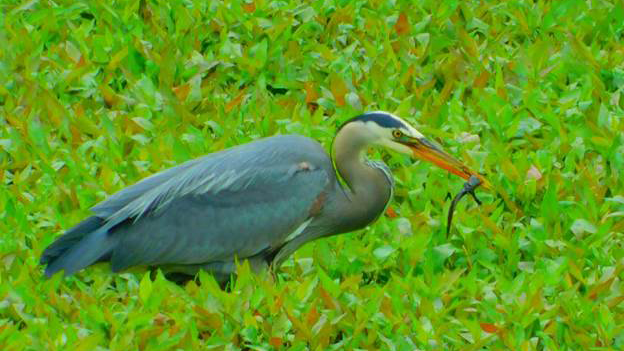
Flett Creek – Responding to the Challenges
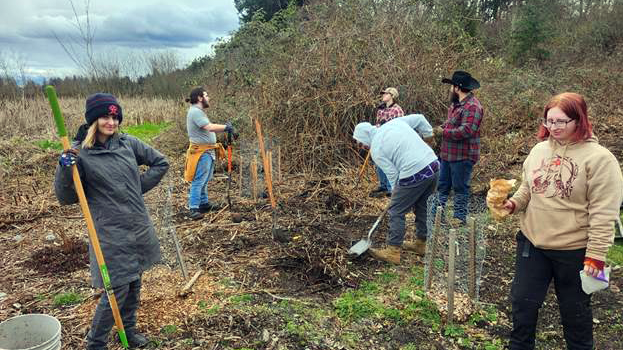
On CPTC’s Flett Outdoor Lab, restoration efforts have occurred in the riparian zone of Flett Wetland with removal of Himalayan Blackberry and English ivy, and planting and seeding of native trees and wildflowers. In the Garry oak savannah of the Lab, scotch broom and blackberry is being removed with Garry oak saplings planted and native prairie seed spread. In the wetland, CPTC partners with City of Tacoma and Washington Conservation Corps to remove reed canary grass from the stream, build up the stream bank, and plant willow stakes in an effort to improve flow and fish passage. Further downstream, near the confluence with Chambers Creek, a private landowner has been removing invasive species and planted various native riparian species. There is still much work to accomplish in terms of managing invasive species in the Flett Creek watershed.
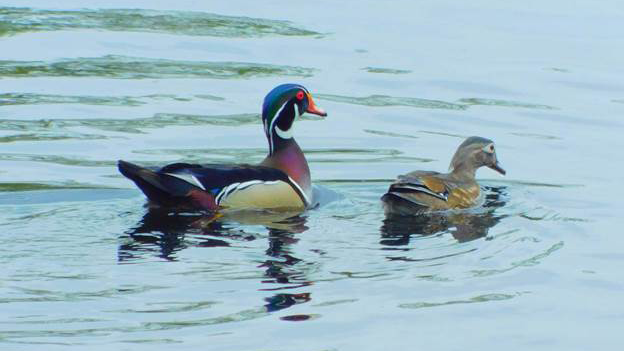
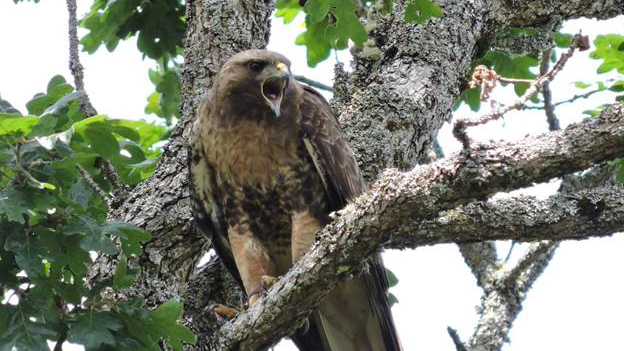
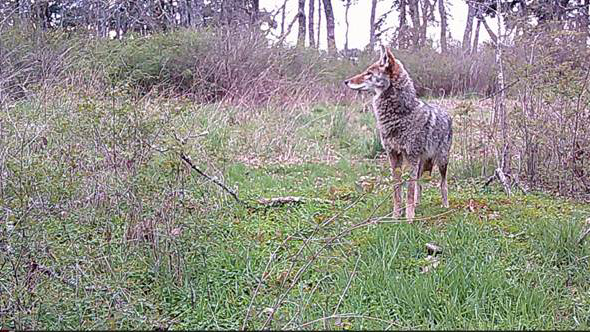
However, despite these challenges, the watershed supports a great deal of wildlife. This includes coho and chum salmon, cutthroat trout, beavers, river otters, mink, salamanders, frogs, painted turtles, osprey, red-tailed hawks, owls, great blue heron, and a wide array of other waterfowl.
Written by Derek Faust, Vice Chair, Clover-Chambers Watershed Council
Get Involved
Take Action / Volunteer
Amplify our impact—join us in breaking barriers, planting trees, and organizing on‑the‑ground restoration activities.
Donate Today
Fuel our work restoring the watershed and supporting salmon recovery with your donation.